Do Colleges Have a Problem with AI? The Answer Is More Complicated Than You Think
Artificial intelligence has become one of the biggest topics in higher education. From ChatGPT and Claude to AI-powered research assistants and grammar tools, students now have access to technology that simply didn't exist a few years ago.
But does that mean colleges are against AI?
Not exactly.
The reality is much more nuanced. While some universities have introduced strict limitations on AI-generated work, many others actively encourage students to use AI responsibly. The real question is no longer whether students use AI—it's how they use it.
Universities Are Not Fighting AI—They're Fighting Academic Misconduct
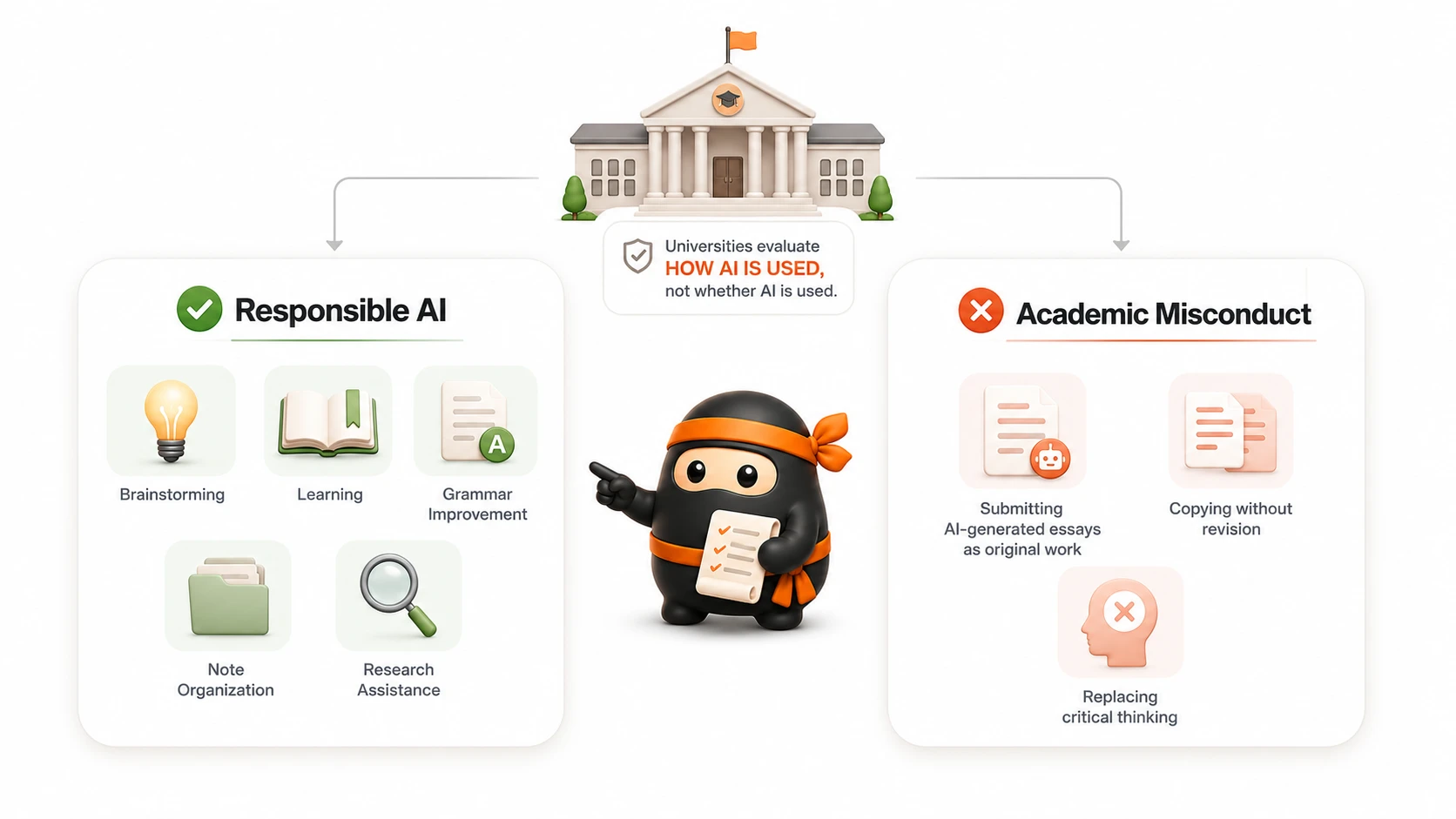
One of the biggest misconceptions among students is that AI itself is banned.
In reality, most institutions focus on academic integrity rather than technology.
Using AI to brainstorm ideas, explain difficult concepts, improve grammar, or organize notes is often considered acceptable. However, submitting AI-generated essays as original work without disclosure may violate university policies.
The distinction is important:
- Using AI as a learning assistant is increasingly accepted.
- Using AI to replace your own thinking is where problems begin.
Many universities have updated their academic integrity guidelines to reflect this difference.
Different Colleges Have Different Rules
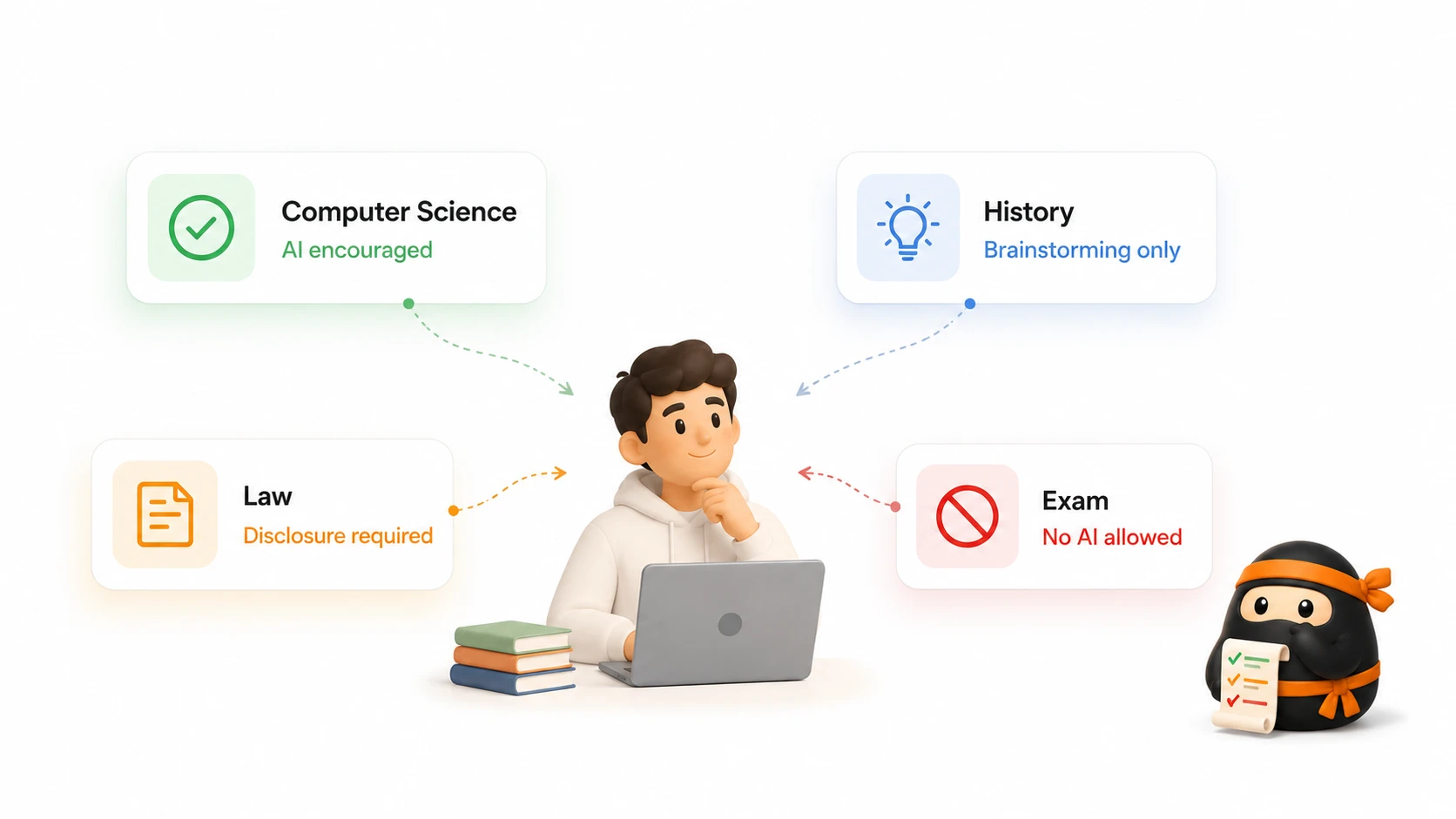
There is no universal AI policy across higher education.
Some universities allow AI in nearly every course as long as students acknowledge its use.
Others leave the decision entirely to individual professors.
Some instructors welcome AI-assisted drafting and revision, while others prohibit AI in written assignments altogether.
For example, you might find situations such as:
- A computer science professor encouraging students to use AI for debugging code.
- A history instructor allowing AI for brainstorming but not for writing essays.
- A law school requiring students to disclose every AI interaction.
- An exam where any AI assistance is strictly forbidden.
The same student could therefore be following the rules in one class while violating them in another.
That is why understanding course-specific expectations has become just as important as understanding the assignment itself.
AI Detection Isn't Perfect
Another common concern is AI detection software.
Many colleges use tools that attempt to estimate whether a piece of writing was generated by AI. However, researchers and universities themselves acknowledge that these systems are not definitive proof.
False positives happen.
Well-written human essays have sometimes been flagged as AI-generated, while heavily edited AI text can occasionally avoid detection altogether.
Because of these limitations, many institutions advise instructors not to rely solely on AI detection scores when evaluating academic integrity.
Instead, professors often consider additional evidence, such as:
- previous writing samples,
- classroom participation,
- revision history,
- citations,
- and conversations with the student.
Privacy Is Becoming an Important Part of AI Usage
Another issue that receives far less attention is privacy.
When students paste essays, research papers, or personal information into online AI tools, they may unintentionally expose sensitive academic work.
This becomes especially important when assignments contain unpublished research, confidential internship information, or personal data.
Before using any AI platform, students should understand what happens to the content they upload, whether it is stored, used for model training, or shared with third parties.
Privacy is becoming just as important as plagiarism in responsible AI use.
Responsible AI Use Is Becoming a Valuable Skill
Rather than banning AI entirely, many universities are shifting toward teaching students how to use it responsibly.
This includes learning how to:
- verify AI-generated information,
- recognize hallucinations,
- cite AI when required,
- protect sensitive information,
- and maintain original critical thinking.
These skills will likely remain valuable long after graduation, as AI becomes integrated into workplaces across nearly every industry.
Tools Can Help Students Stay on the Right Side of University Policies
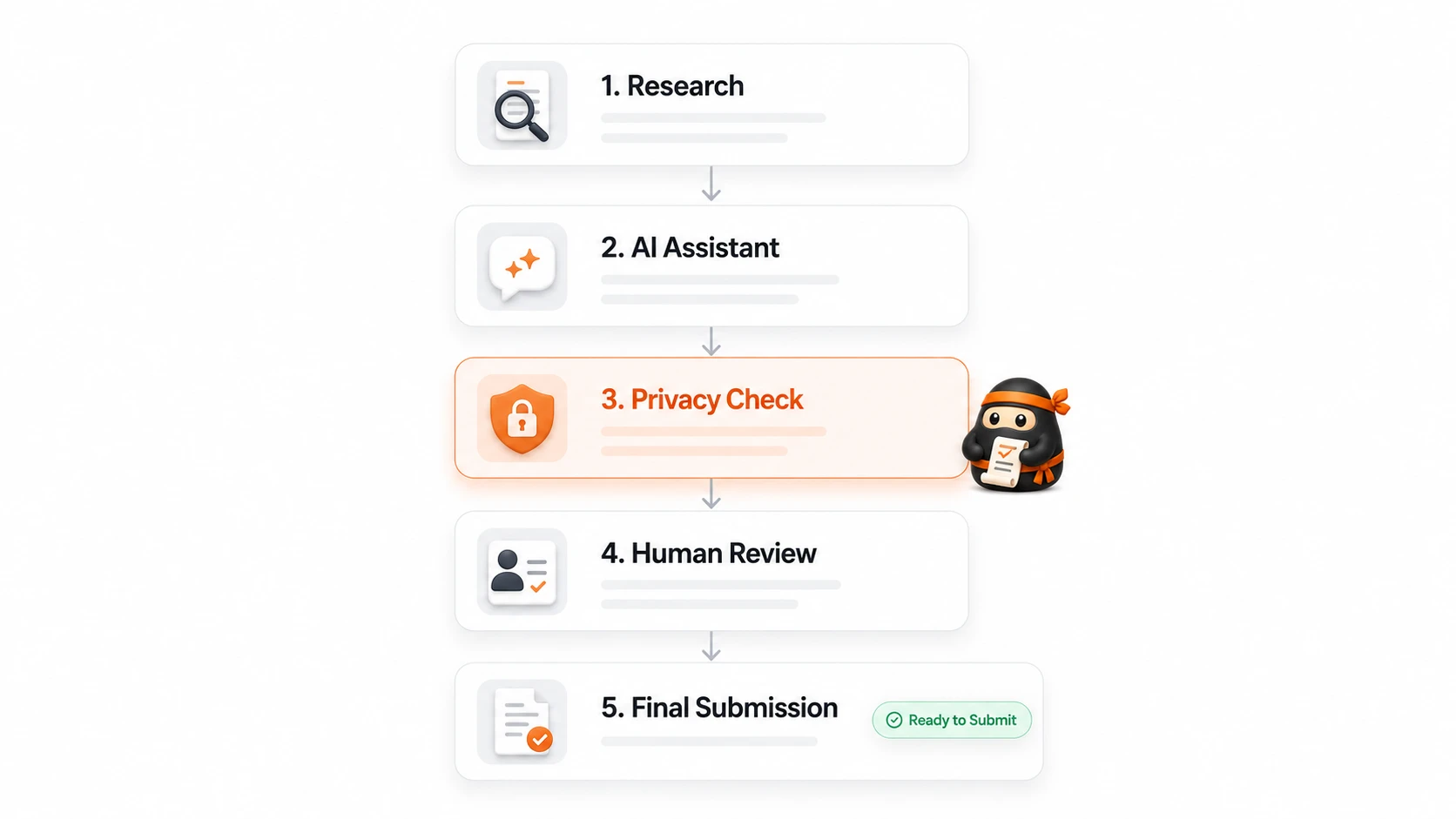
As AI policies become more complex, students increasingly rely on specialized tools instead of treating AI as a simple text generator.
For example, Humanio AI provides several student-focused features designed to support responsible AI use rather than replace original work.
One particularly useful feature is its Policy Checker, which helps students identify potentially sensitive information before sharing text with AI systems. This can reduce the risk of accidentally exposing personal data, confidential research, or institution-specific information.
Beyond privacy, Humanio AI also offers tools that can help students work more effectively with AI-generated content, including text humanization, readability improvements, and writing refinement. Used responsibly, these tools can support the writing process while allowing students to keep ownership of their ideas and adapt their work to meet course expectations.
The Future Isn't AI vs. Colleges
The conversation has moved beyond whether AI belongs in higher education.
It already does.
The real challenge is learning to use these technologies ethically, transparently, and thoughtfully.
Students who understand university policies, verify AI-generated information, protect their privacy, and continue developing their own critical thinking skills will be far better prepared than those who simply try to avoid AI—or rely on it entirely.
In the end, colleges are not universally against artificial intelligence.
They are against shortcuts that undermine learning.
And that's an important difference.